Settling Lakes and Rivers
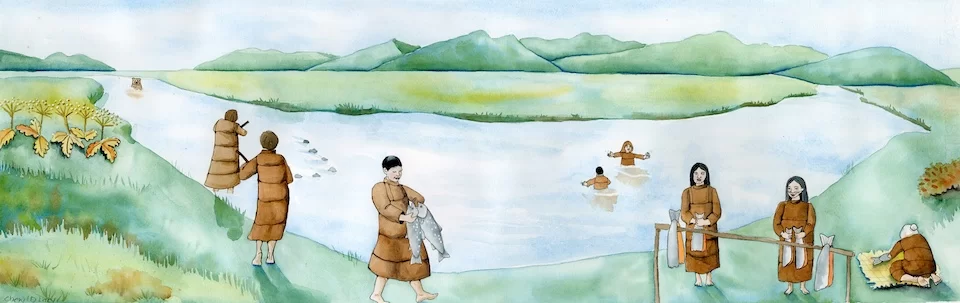
Family fishing in the upper Karluk River. Watercolor by Cheryl Lacy, produced with support from the Institute of Museum and Library Services.
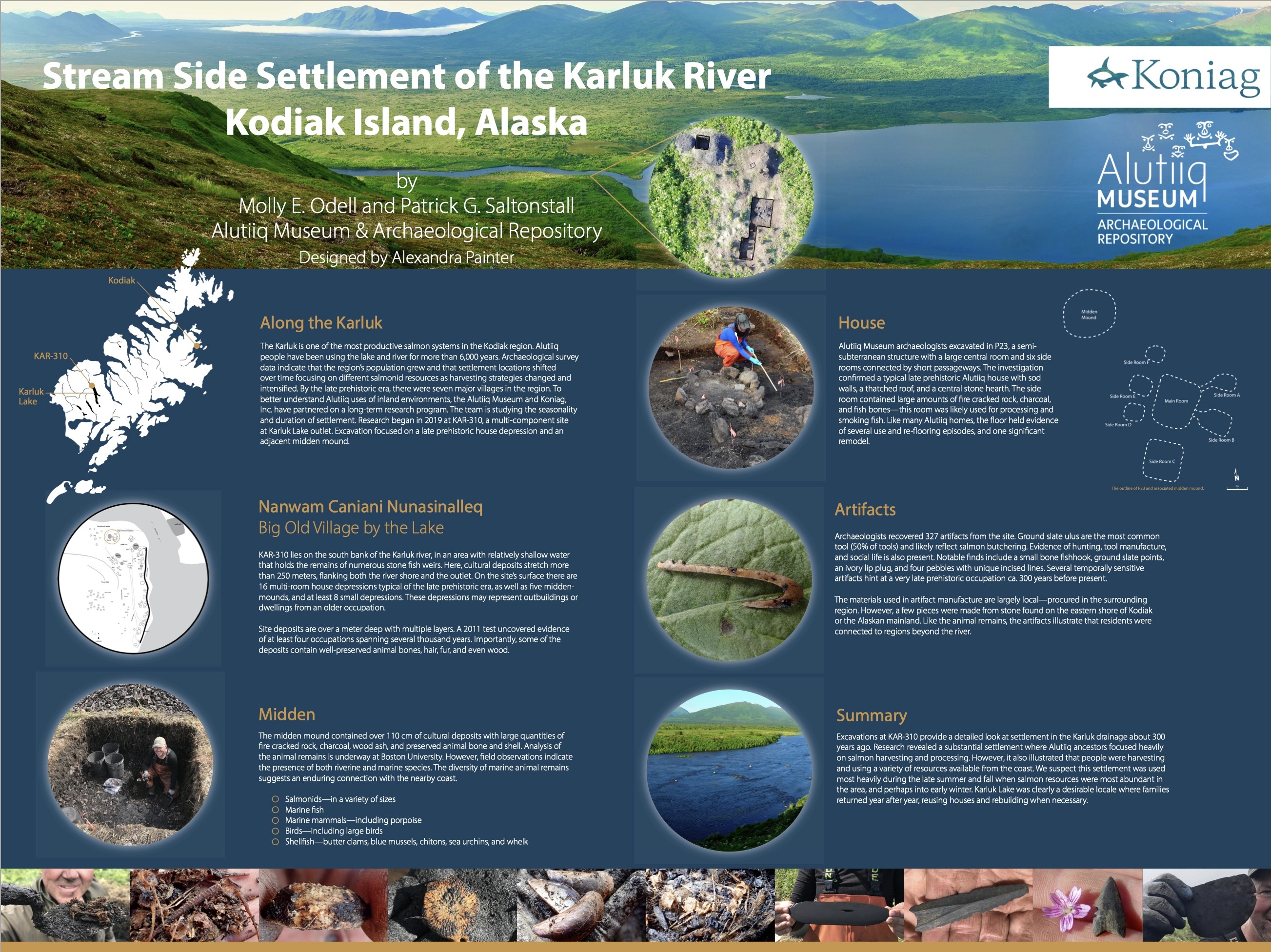
The Karluk is one of the most productive salmon systems in the Kodiak region. Alutiiq/Sugpiaq people have been using the lake and river for more than 7,800 years. Archaeological data indicate that the region’s population grew and that settlement locations shifted over time focusing on different salmon resources as harvesting strategies changed and intensified. By the late prehistoric era, there were seven major villages in the region. To better understand Alutiiq uses of inland environments, the Alutiiq Museum and Koniag have partnered on a long-term research program. The team is studying the seasonality and duration of settlements.
300 Years Ago on the Karluk River
Excavations at a 300-year-old site revealed a substantial settlement where Alutiiq/Sugpiaq ancestors focused heavily on salmon harvesting and processing. However, people were also harvesting and using a variety of resources available from the coast. This settlement was probably used most heavily during the late summer and fall when salmon resources are abundant, and perhaps into early winter. Karluk Lake was a desirable locale where families returned year after year, reusing houses and rebuilding when necessary.
Iqsani’s Trout Hook
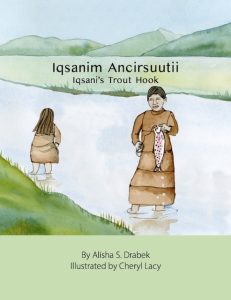 Qanitiisa and her brother Iqsani are young, but they have important jobs at fish camp. There are salmon to carry, a fire to feed, plants to collect, and trash to dump. Follow these Alutiiq children as they help their parents with fall fishing and have lots of fun along the way.
While Qanitiisa and Iqsani are imagined, their world is real. Their story is set in an old Alutiiq fish camp on Kodiak’s Karluk River. Archaeologists studied the camp, and their finds provided clues about Alutiiq life three hundred years ago. Enjoy the story and then learn about the sod houses, artifacts, and animal remains that inspired this children’s story. Written by Alisha Drabek, with illustrations by Cheryl Lacy.
Supported by Koniag and the Institute of Museum and Library Services.
1300 Years Ago on Karluk Lake
The remains of fall fish camps dot the shore of Karluk Lake, illustrating the places where Alutiiq families fished for red and silver salmon 1300 years ago. In these small settlements, people built warm sod houses, tended to their nets, and cleaned and smoked fish for winter. These camps were probably used for many years by people from nearby Uyak Bay.
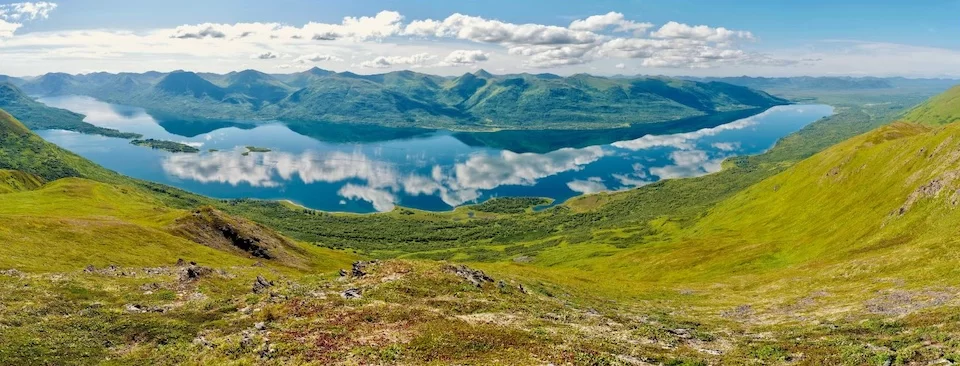
Karluk Lake, summer 2025, view west
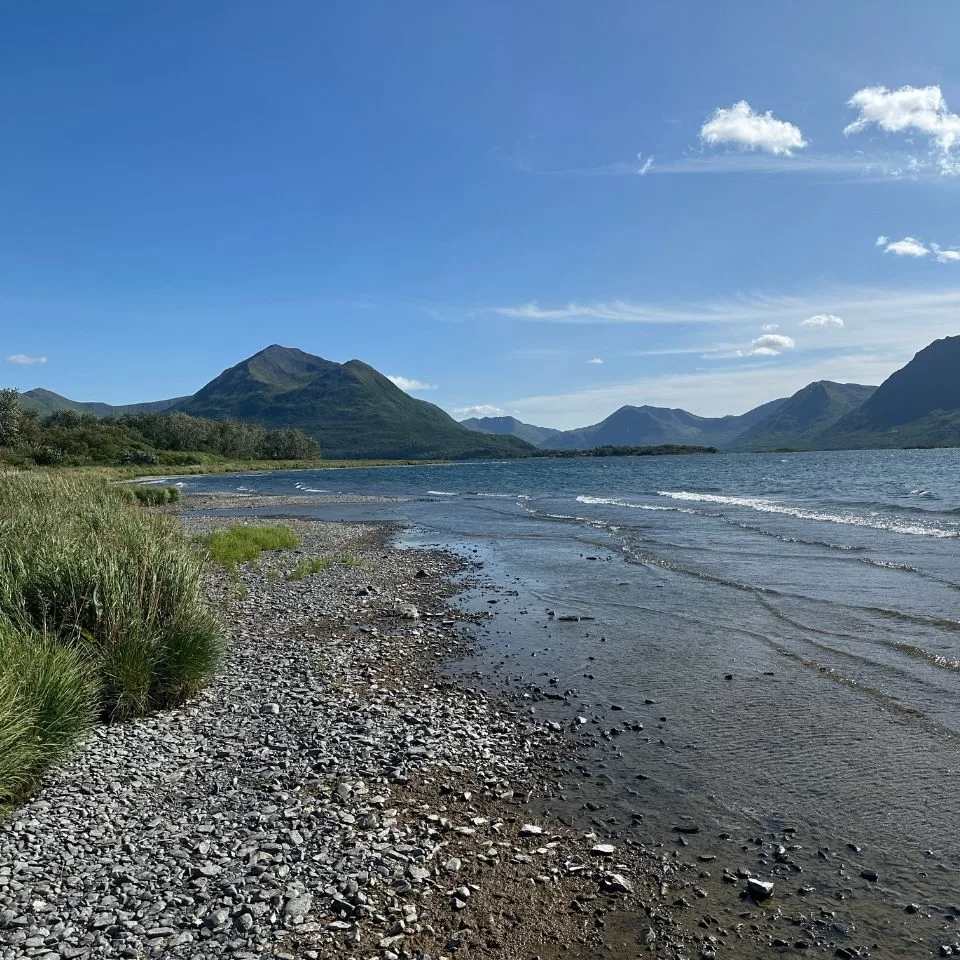
Nikllirtuusqaq Site
On a low terrace overlooking Karluk Lake, Alutiiq ancestors built a small settlement. They picked this spot to harvest fish. On the gravelly shore below, red salmon spawn each fall.
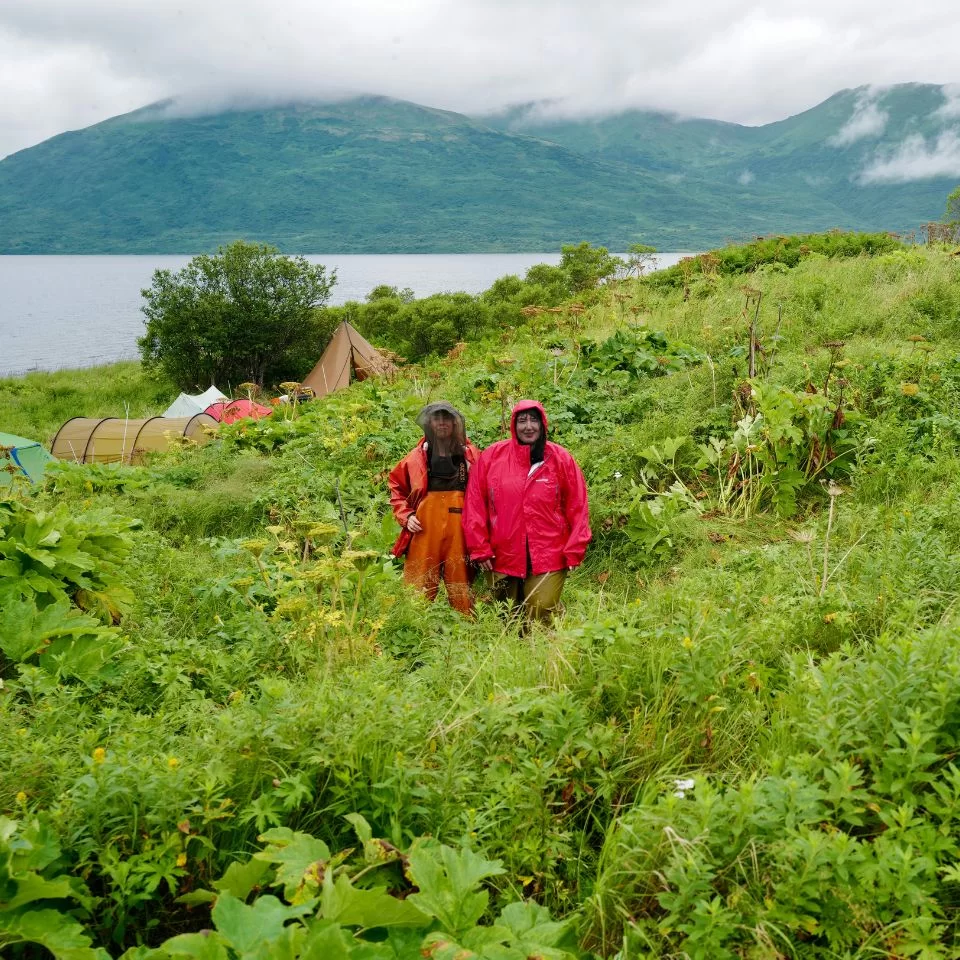
Fish Camp
The small site had three depressions on its surface. They represent the remains of two houses and a storage shed. Archaeologists tested each one to learn more about ancestors’ activities.
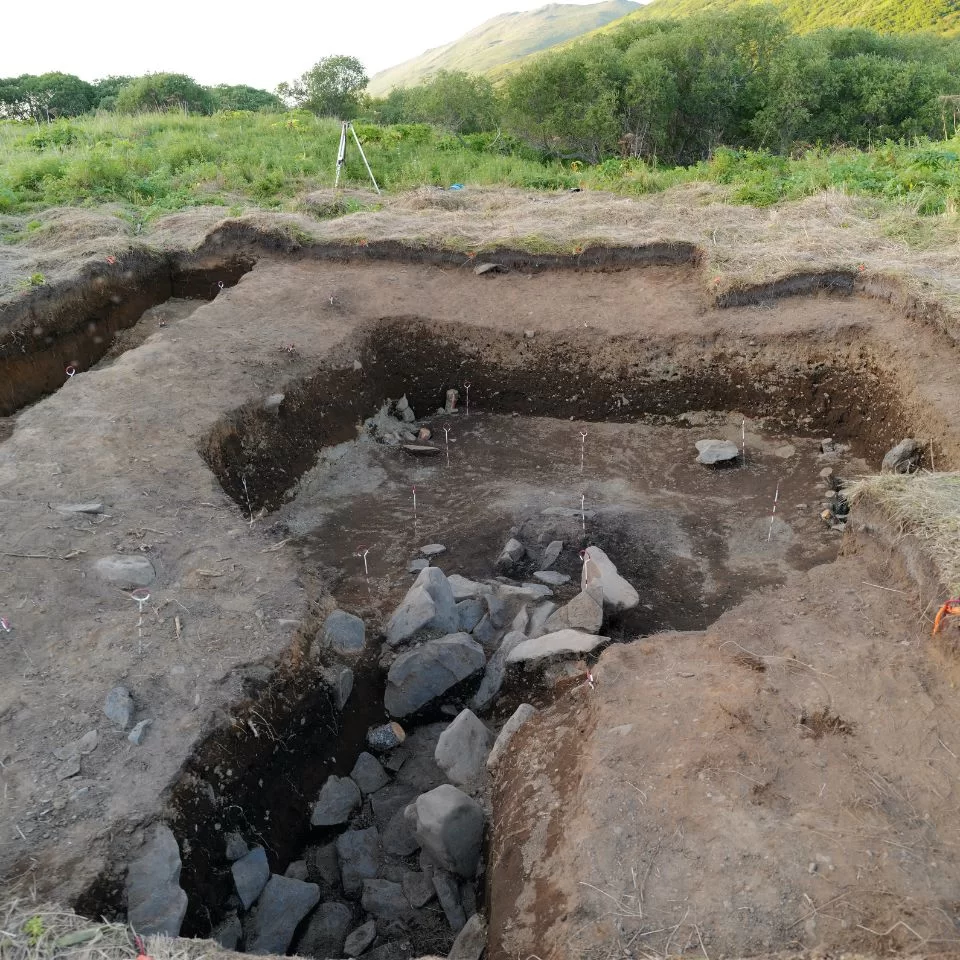
Sod House
Beneath the thick vegetation and a layer of sod, archaeologists found the remains of a house dug deeply into the ground. It had a rock-lined entrance tunnel and a central hearth.
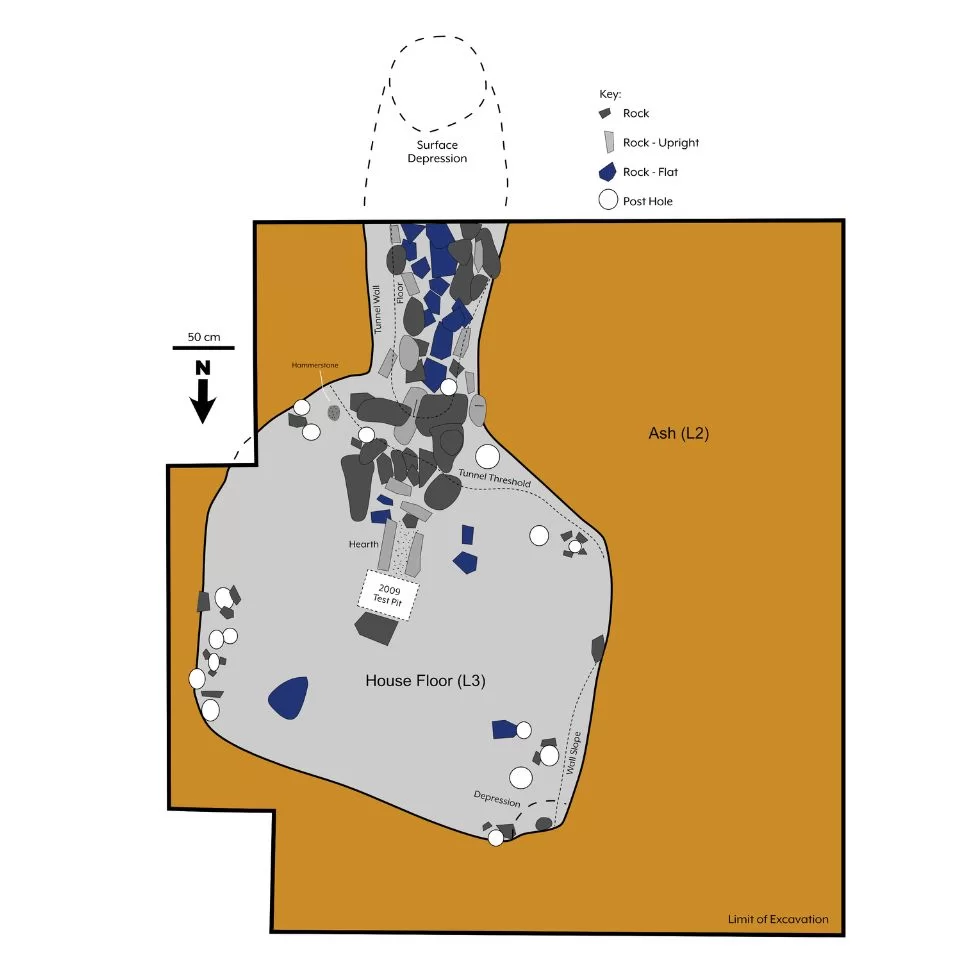
House Map
The house was well-built. Residents invested their time and effort into digging a foundation, building a wooden frame, and covering it with sod. It was probably revisited every fall for years.
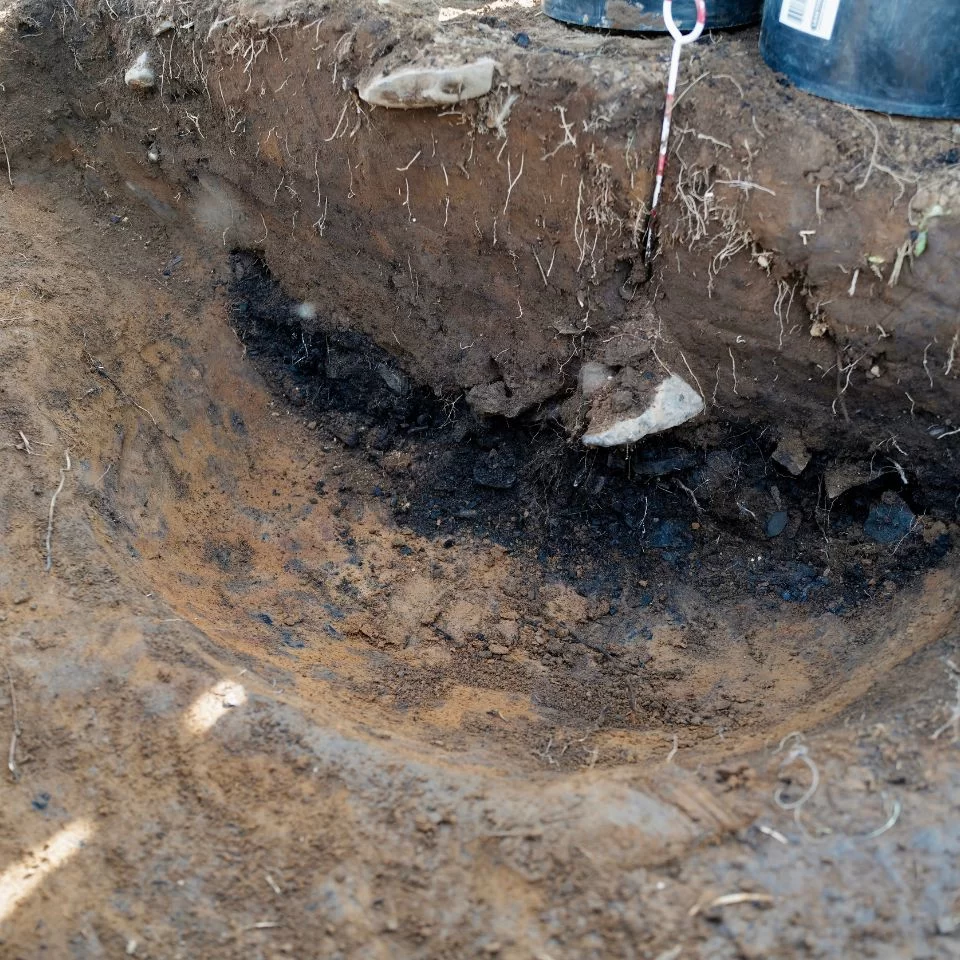
Outside
Outside the house, researchers found a fire pit and a work area. Residents appear to have dried fish over slow-burning smoky fires, repaired nets, and made tools beside the house.
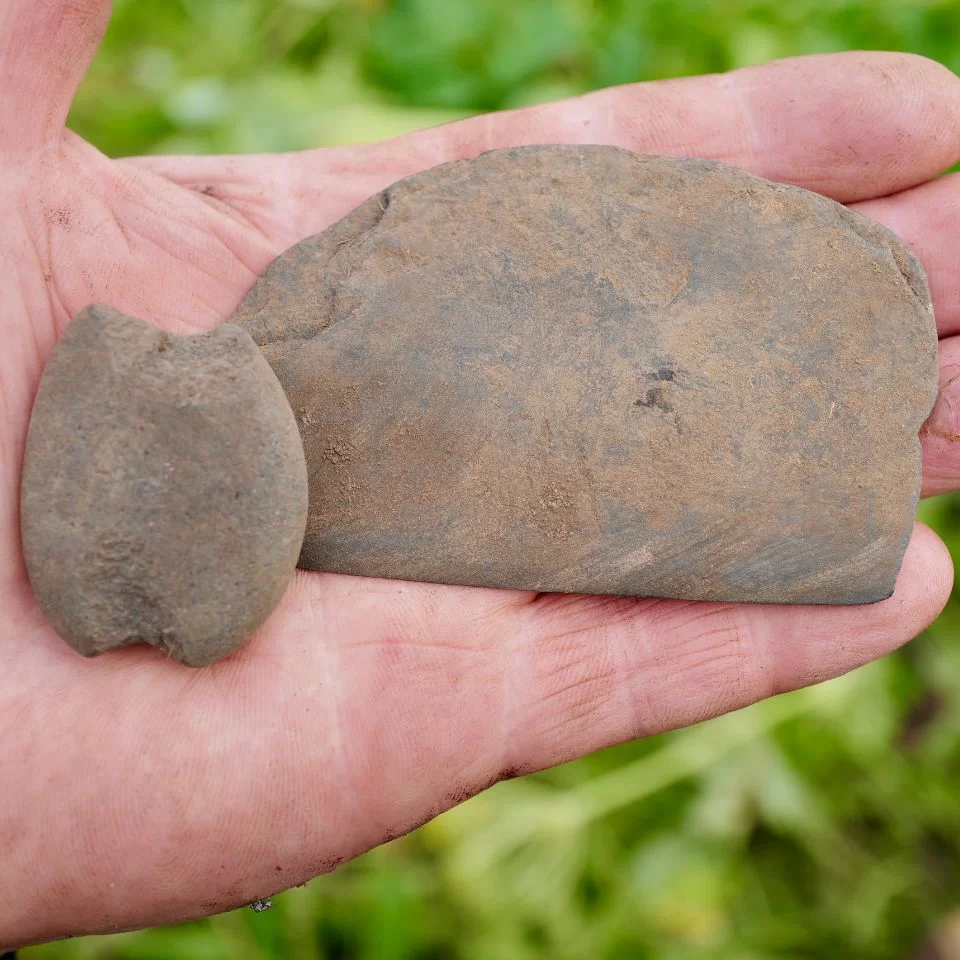
Nets and Knives
Fishing and fish processing were the main activities at Nikllirtuusqaq. The two most common tools were net sinkers—notched pebbles designed to keep nets open, and ulus—knives for cleaning fish.
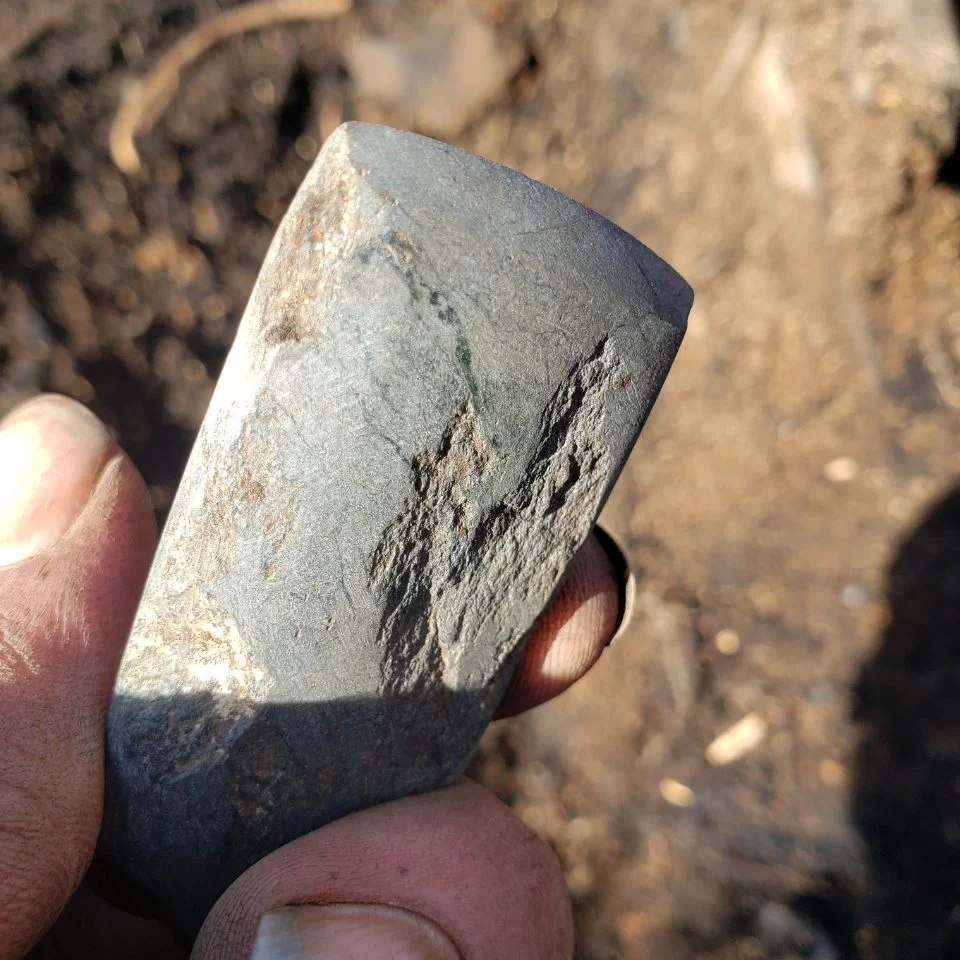
Woodworking
Small adzes of hard blue schist reflect woodworking at Niklllirtuusqaq. Archaeologists found 7 of these tools, with different bit shapes. They may be a carver’s set.
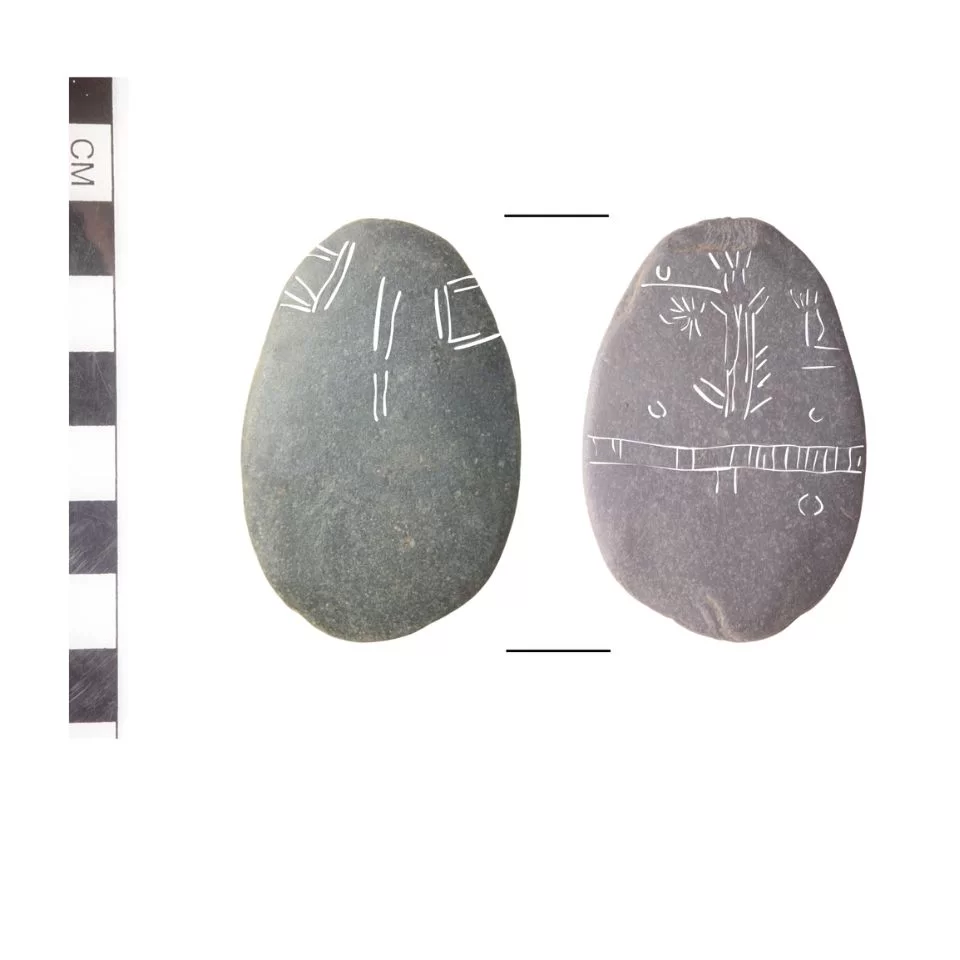
Pebble Drawing
One small pebble from the site preserved a rare drawing. Cut into its surface is a design that resembles parka decorations. It is carved on both sides.
Supported by Koniag.
7800 Years Ago on the Karluk River
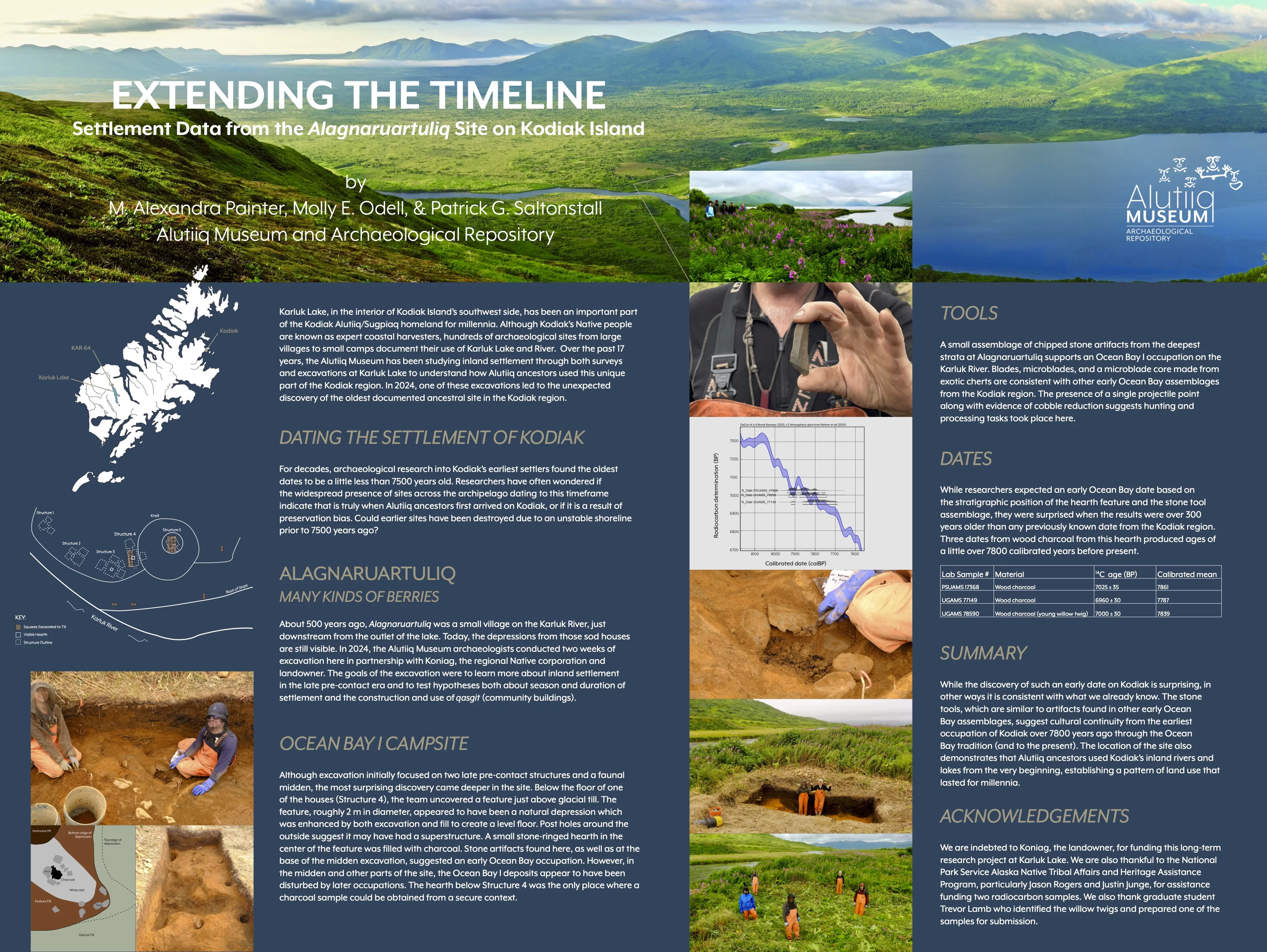
When did Alutiiq ancestors begin using Kodiak Island’s inland environment? A recent study suggests that people camped in the Karluk River drainage more than 7,800 years ago. At the outlet to Karluk Lake, archaeologists found a small shelter with a hearth and stone tools. This is the oldest securely dated site in the archipelago.
What were Alutiiq ancestors harvesting at Karluk Lake 7800 years ago? Studies from neighboring regions suggest salmon populations stabilized and grew after 6,300 years ago. Early lake visitors may have been hunting waterfowl, collecting plant foods, or harvesting from the fox, river otter, and bear populations that settled Kodiak well before people.
Supported by Koniag.