Cama’i Mail
MONTHLY EMAIL BROADCAST
Start each month with an update on museum news with our email broadcast. Learn about upcoming events, connect to new resources, and find opportunities to work with us. If you would like to subscribe to Cama’i Mail, please contact us to be added to our distribution list.

Download a recent issue:

Press Releases
The Alutiiq Museum regularly shares information on its activities with the press. Click on a link below to read or download a recent press release. If you would like to receive our press releases by email, please contact us to be added to our distribution list.

KODIAK, AK: As Kodiak approaches the 242nd anniversary of the events at Awa’uq, the Alutiiq Museum is pleased to announce the launch of the Refuge Rock Monument Planning Project, a two-year community planning effort that will guide the creation of a public monument in memoriam of Awa’uq and the Alutiiq/Sugpiaq Ancestors who perished there.
The Museum has selected Gínga & Igniñ Collective, an Alaska Native nonprofit, to serve as project manager for the planning process. The Collective’s team, led by Silugngataanit’sqaq Melissa Marton, will support the formation of a community Advisory Committee, lead public engagement across Kodiak and Old Harbor, and guide the project toward a monument concept and site that reflect the community’s own vision for how this history should be remembered.
“This project belongs to the community,” said April Counceller, Executive Director of the Alutiiq Museum. “Our role, and the role of our project management team, is to hold open the space for Elders, descendants, and community members to decide together how this history is told and how it is honored. We are grateful for the opportunity to begin this work.”
On August 14, 1784, Russian fur trader Grigorii Shelikhov led an attack against several thousand Alutiiq people who had gathered for safety at a refuge rock, a small, steep-walled island off Sitkalidak Island near present-day Old Harbor traditionally used as a place of shelter during conflict. After a standoff of several days, Russian forces crossed a narrow spit of land exposed at low tide and opened fire with cannon and muskets. Historical estimates range from 200 to 500 Alutiiq people killed, with many more taken hostage. Shelikhov and his men went on to force Alutiiq hunters into servitude harvesting sea otter pelts, marking the beginning of Russian colonial rule on Kodiak Island. The site is remembered today by its enduring Alutiiq place name, Awa’uq, meaning “to become numb.”
“The massacre, led by Russian fur traders against Alutiiq/Sugpiaq tribal members, changed the history of all Alaska. But few people in Kodiak even know about it, and those who do may only know the basics,” said Counceller. Community members have recently asked why the events at Awa’uq are not more widely known, and the Museum hopes this planning project, and the public conversations it generates, will help change that.
Awa’uq is remembered today not only as a site of tragedy, but as a testament to the endurance of the Alutiiq people. The Refuge Rock Monument Planning Project centers that endurance, and will result in a monument in Kodiak alongside a dedicated commemoration plan developed with the village of Old Harbor, whose community holds the closest relationship to this history.
The public is invited to learn more about the project at a Town Hall meeting on Wednesday, September 2, 2026, from 6:00 to 8:00 PM at the Alutiiq Museum. The evening will feature a presentation and community discussion about the events at Awa’uq, including the history leading up to and following the massacre, led by Dehrich Chya, the Museum’s Director of Language & Living Culture. The event will also be live streamed for those unable to attend in person. This will be the first of several public engagement opportunities planned over the course of the project, with additional details shared on the Museum’s website and social media channels as the date approaches.
“Our Alutiiq community has never been given the space to fully reckon with that history together. This monument project provides an important opportunity to open that healing process,” said Silugngataanit’sqaq Melissa Marton, Lead Project Manager with Gínga & Igniñ Collective. “We are honored to walk alongside the Alutiiq community, the people of Old Harbor, and the broader Kodiak community as they decide together how Awa’uq is remembered.”
Those interested in following the project or joining the Town Hall are encouraged to contact the Alutiiq Museum.
The Alutiiq Museum is a non-profit organization dedicated to preserving and sharing the history and culture of the Alutiiq/Sugpiaq, an Alaska Native people. Representatives of Kodiak Alutiiq organizations govern the Museum with funding from charitable contributions, memberships, grants, contracts, and sales.

KODIAK— In June, the Alutiiq Museum completed a new project to share information about Kodiak’s maritime heritage in a public exhibit on display at the Kodiak Marketplace downtown. The centerpiece of the exhibit is a historic wooden frame of a Alutiiq paitaalek—triple-hatched kayak. The kayak is displayed in an opening between the first and second floor of the building, allowing the vessel frame to be seen from both the top and the bottom.
In 2009, the Russian Orthodox Diocese of Alaska gave the Alutiiq Museum a large collection of artifacts. Among them was this wooden frame of a rare 19th-century, Alutiiq paitaalek—triple- hatched kayak. In the colonial era, Alutiiq paddlers used these large skin boats to transport a trader or clergy member seated in the center. The museum’s paitaalek frame was discovered near Dillingham, in the remains of the old Nushagak church. Nushagak was a 19th-century Bristol Bay village that was a cultural crossroad where Yup’ik, Alutiiq/Sugpiaq, and Athabascan people lived and worked. Villagers used the boat to ferry priests to neighboring communities.
The distinct shape of the qayaq’s bow identifies it as an Alutiiq style kayak with a split and upturned design to help cut through the waves. Notably, this new exhibit is near Kodiak Harbor, and the display reinforces the antiquity of maritime harvesting in our region and celebrates the ingenuity of local mariners.
Exhibits Manager Alex Painter shares, “this piece represents one of seven boats in our care and is the largest example (26 feet) and the only three-person kayak. It is so long the museum does not have an appropriate place to display the boat in our own building. Now that the kayak is on display, it can be enjoyed by the public and used to support community education and goals for historic preservation.” This project was made possible with support from Kodiak Island Borough, Kodiak Area Native Association, and the State of Alaska: Office of History and Archaeology.
The Alutiiq Museum is a non-profit organization dedicated to preserving and sharing the history and living culture of the Alutiiq, an Alaska Native people. Representatives of Kodiak Alutiiq organizations govern the museum with funding from charitable contributions, memberships, grants, contracts, and sales.
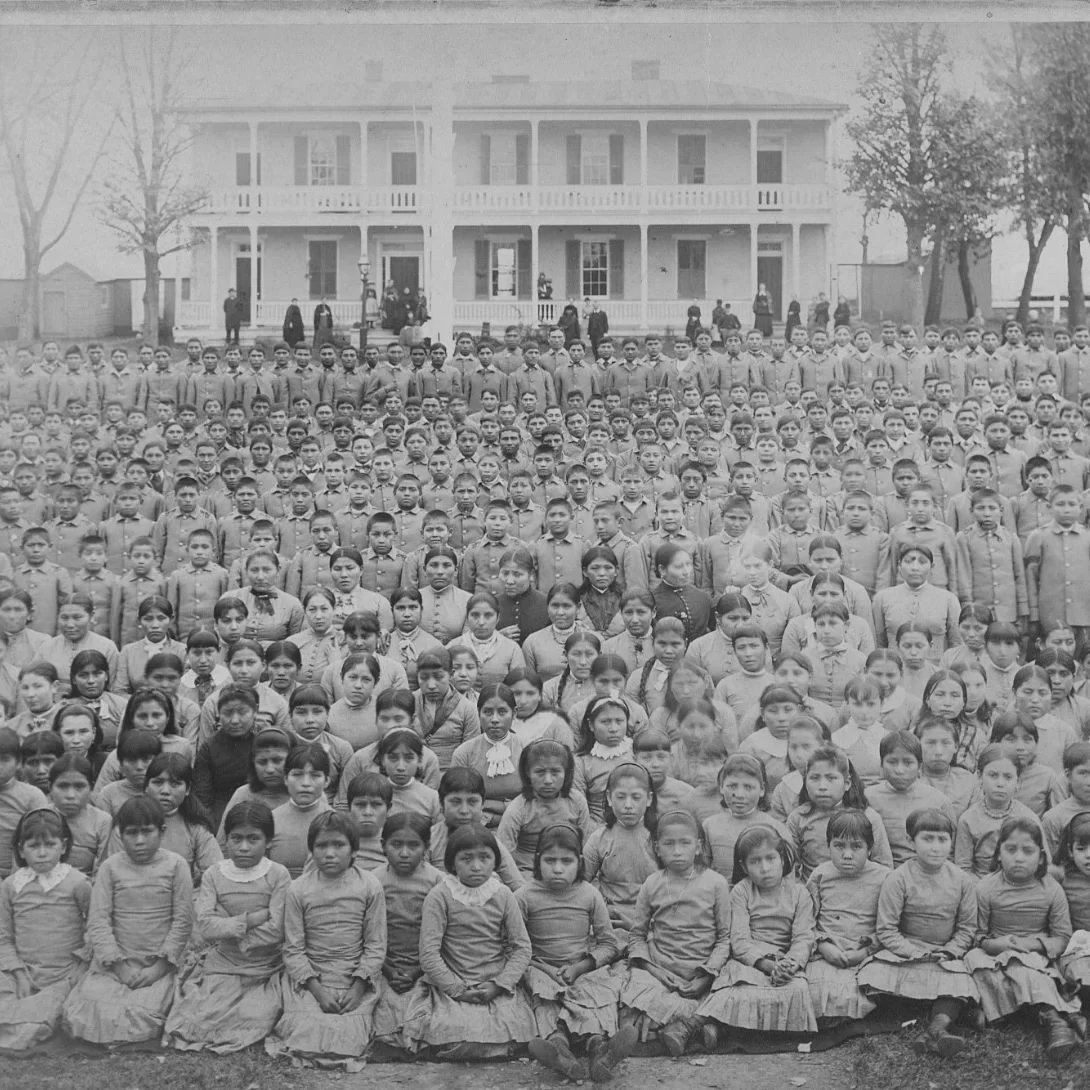
KODIAK, AK—The Alutiiq Museum is honored to present a new exhibit in its Living Culture Gallery. This exhibit shares the story of eleven students taken from Woody Island and Long Island to the Carlisle Indian Industrial School in Carlisle, Pennsylvania, in 1901, and the ongoing efforts to bring the remains of two girls home. “From Kodiak to Carlisle, Tracing our Lost Students” features a collection of photographs accompanied by historical context about the student’s experience. The Alutiiq Museum is grateful to have support from the Tangirnaq Native Village and the Bureau of Indian Affairs for the development of this exhibit. In the early 20th century, the United States government sought to assimilate Native children into American society through a system of boarding schools designed to suppress Indigenous languages and cultures. Eleven Alaska Native children were taken from Woody Island and Long Island to the Carlisle Indian Industrial School in 1901. Two of these students, Anastasia Ashouwak and Parascovia Apaiukak, died while attending the school and were buried on its grounds. Their stories are part of a broader history of loss experienced by Native communities whose children were sent far from home. In 2021, the Alutiiq Museum worked in partnership with local Tribes, Native corporations, community members, and descendants to begin efforts to bring these two girls home. The exhibit highlights this collaborative work and honors the lives of the students and their families. Director of Language and Living Culture Dehrich Chya said, “I hope people find this exhibit moving. The story of Anastasia’s return is especially monumental, and I think it is important to share information about all eleven of these students.” The exhibit opening will be on April 3 from 5:00 to 7:00 PM at the Alutiiq Museum, and is supported by the City of Kodiak. This event is open to the public and admission to the Living Culture Gallery is always free. The Alutiiq Museum is a non-profit organization dedicated to preserving and sharing the history and culture of the Alutiiq/Sugpiaq, an Alaska Native tribal people. Representatives of Kodiak Alutiiq organizations govern the museum with funding from charitable contributions, memberships, grants, contracts, and sales.
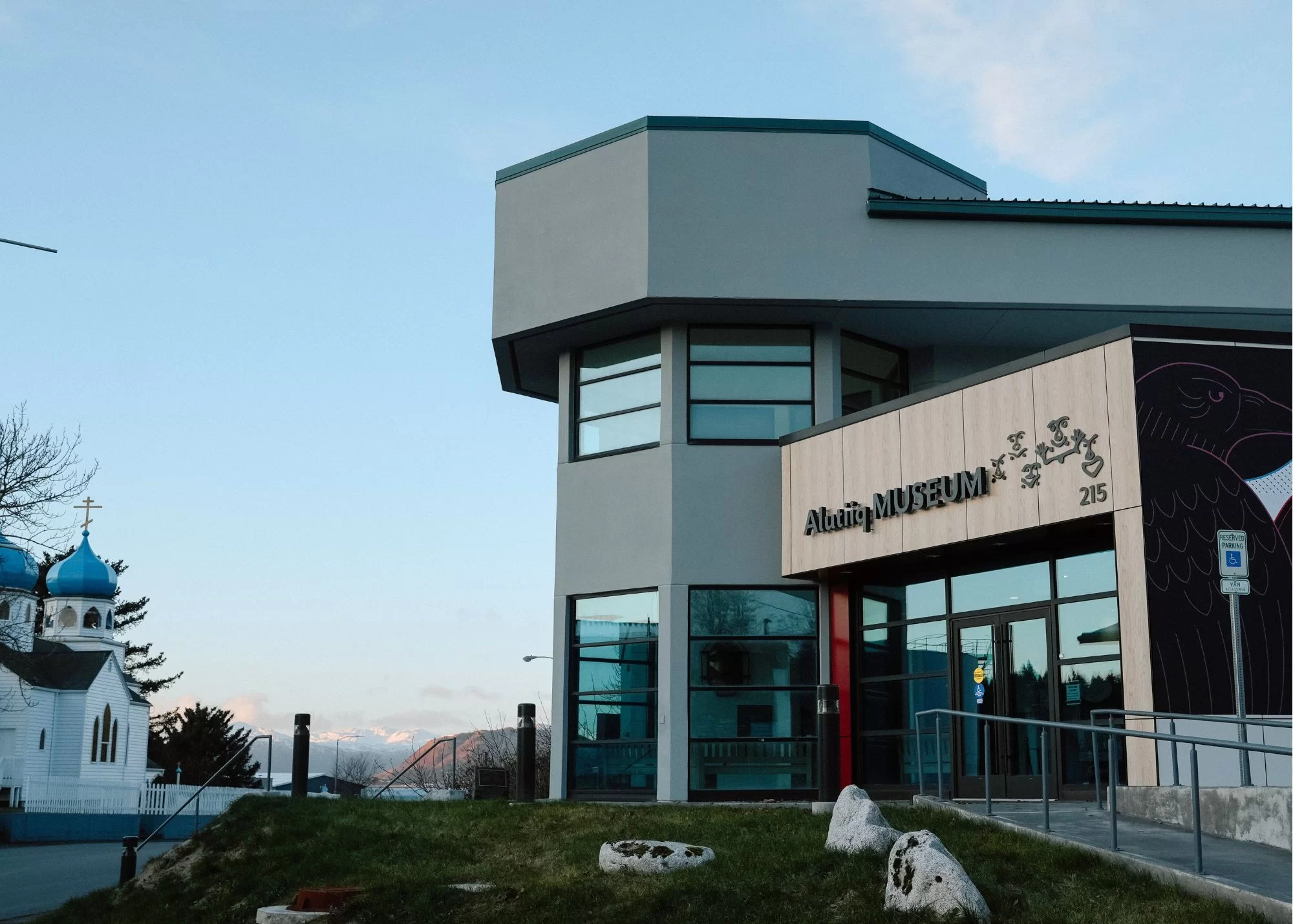
KODIAK, AK—The Alutiiq Museum and Archaeological Repository is proud to announce its reaccreditation by the American Alliance of Museums (AAM). This certification recognizes the museum’s continued excellence and adherence to national standards. Reaccreditation was granted by AAM’s Accreditation Commission following a rigorous, multi-year process that included a comprehensive self-study and an on-site evaluation by museum peers. This peer-review system ensures that accredited museums meet high standards and continue to improve. The Alutiiq Museum is one of a select group of museums nationwide to achieve and maintain accreditation and one of just seven accredited museums in Alaska. Accredited museums are recognized for meeting the highest standards of professional practice and for their commitment to accountability, institutional growth, and public service. This distinction affirms that the Alutiiq Museum remains a trusted steward of its collections and a leader in preserving and sharing Alutiiq culture. Through this process, the Alutiiq Museum demonstrated strong performance across all areas of operation. The Accreditation Commission specifically commended the museum for its exemplary educational programming and its stewardship of collections. The reviewers also highlighted the museum’s deep commitment to its community, both in organizational practices and public services. The accreditation report concludes “the cooperative spirit and the level of commitment shown by the Native community, the board, the staff, and the larger community should ensure the museum’s continued success.” As part of maintaining accredited status, the museum will continue to engage in ongoing evaluation and planning, with its next reaccreditation review scheduled for 2036. Executive Director April Counceller said, “Accreditation means we have demonstrated long-term professionalism, but also have a commitment to continual improvement. I am so proud of the many people who helped us achieve this distinction for the second time.” The Alutiiq Museum is a non-profit organization dedicated to preserving and sharing the history and culture of the Alutiiq/Sugpiaq, an Alaska Native tribal people. Representatives of Kodiak Alutiiq organizations govern the museum with funding from charitable contributions, memberships, grants, contracts, and sales.
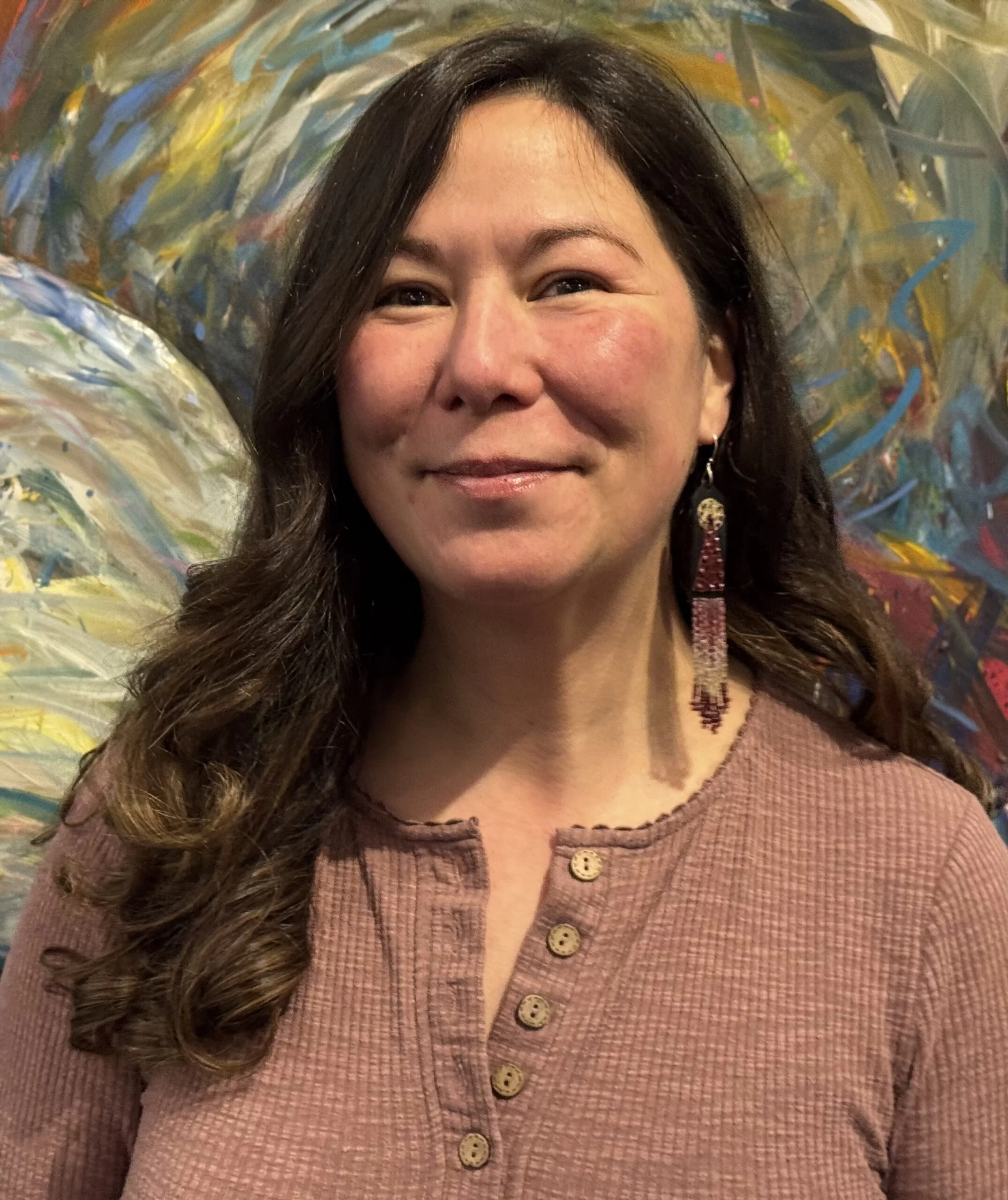
KODIAK, AK—Each year, there are many people who donate their time and talents to the Alutiiq Museum. We are grateful for all who support our mission through volunteerism and every year, for Valentine’s Day, we like to show our appreciation by selecting one supporter to highlight as Volunteer of the Year. For 2025, we have chosen to highlight Kodiak local Marnie Kilborn-Gates for her support of the museum’s grand reopening events. Marnie helped make beaded necklaces in traditional colors to be distributed at our Grand Reopening this past May. Marnie grew up on the island and calls herself a lifelong Kodiakian. She loves the community here and has a giving spirit that leads her to volunteer frequently for a diversity of organizations. From the Alutiiq Museum to the Elks Lodge, Marnie has given her time and talents to the community. Through volunteering Marnie finds connection and an opportunity to serve that is fulfilling. Volunteering allows her to make a difference and give time to organizations that she supports. After many years working for KANA in social services, Marnie has spent the last year taking time to explore her creative side. Volunteering for the museum’s beading project was a perfect bridge for her to spend time getting back into artistic expression. Over the course of several months, Marnie contributed more than 100 necklaces for the special celebration. Sometimes she gathered with a small group of friends, occasionally she worked on her own, and weekly she met with an Alutiiq neighbor and Elder so that they could bead together. Marnie’s neighbor has health challenges that prevent her from attending community events, but they don’t stop her from wanting to be involved. By making a weekly date to bead together, Marnie helped her neighbor be a part of celebrating the museum’s reopening. She said, “This gave me an opportunity to bring a community activity to her… She loved the chance to be creative and make something beautiful. We would work together supporting each other’s creativity.” The simple act of making art accessible for others builds community and connection, perfectly aligning with the museum mission to connect people to Alutiiq culture and we are grateful to Marnie for her work on this project. To learn more about volunteering at the museum, please contact Djuna Davidson (844-4258844; djuna@alutiiqmuseum.org). The Alutiiq Museum welcomes all volunteers, and no previous experience is necessary. The Alutiiq Museum is a non-profit organization dedicated to preserving and sharing the history and living culture of the Alutiiq, an Alaska Native people. Representatives of Kodiak Alutiiq organizations govern the museum with funding from charitable contributions, memberships, grants, contracts, and sales..
Photo: Volunteer of the Year, Marnie Kilborn-Gates,
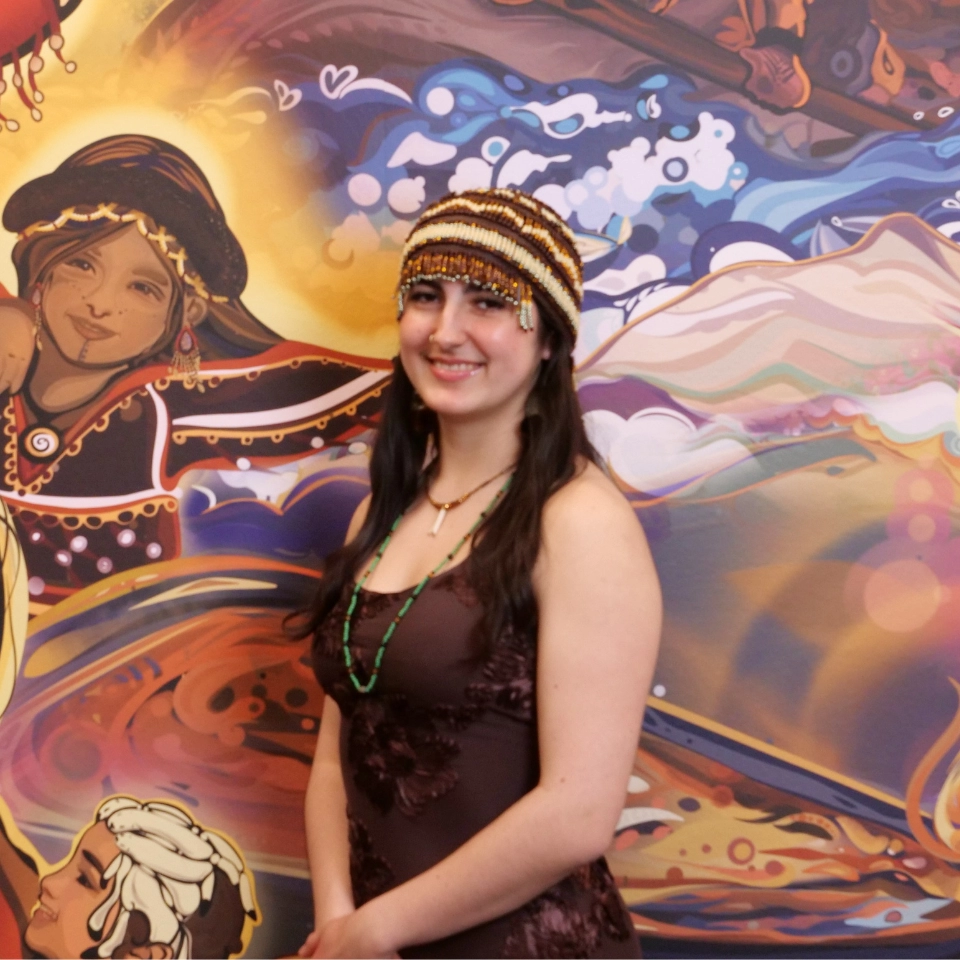
KODIAK, AK—The Alutiiq Museum is proud to announce a new artist services project for the Kodiak Archipelago. Funded by the Administration for Native Americans, this project will provide support and training to Tribal artists to increase their income and raise Alutiiq arts awareness in the tourism industry. Director of Language and Living Culture at the museum, Dehrich Chya says, “We are excited that this project will allow us to collaborate with some of our partners. We will work with KANA’s workforce development program, as well as the Kodiak Arts Council and Kodiak College to offer trainings and resources for artists.”
Veronica Johnson has been hired to coordinate the project, entitled “Kodiak Island Traditional Arts.” The acronym, KITA also means “Let’s Go!” In Alutiiq. Johnson is excited to explore how Alutiiq arts can help grow the Kodiak tourism economy. “People don’t often recognize Alutiiq arts as a key part of Kodiak, but by the end of the project I hope they will,” she says.
Working with Discover Kodiak and other local partners, Johnson will form a Native tourism working group to guide local planning and oversee development of a Native arts regulatory guide to educate the public about laws governing Native arts materials like ivory, feathers, and furs. Those interested in the project are encouraged to email or call the museum to get on the project contact list.
Photo: ANA Project Manager, Veronica Johnson
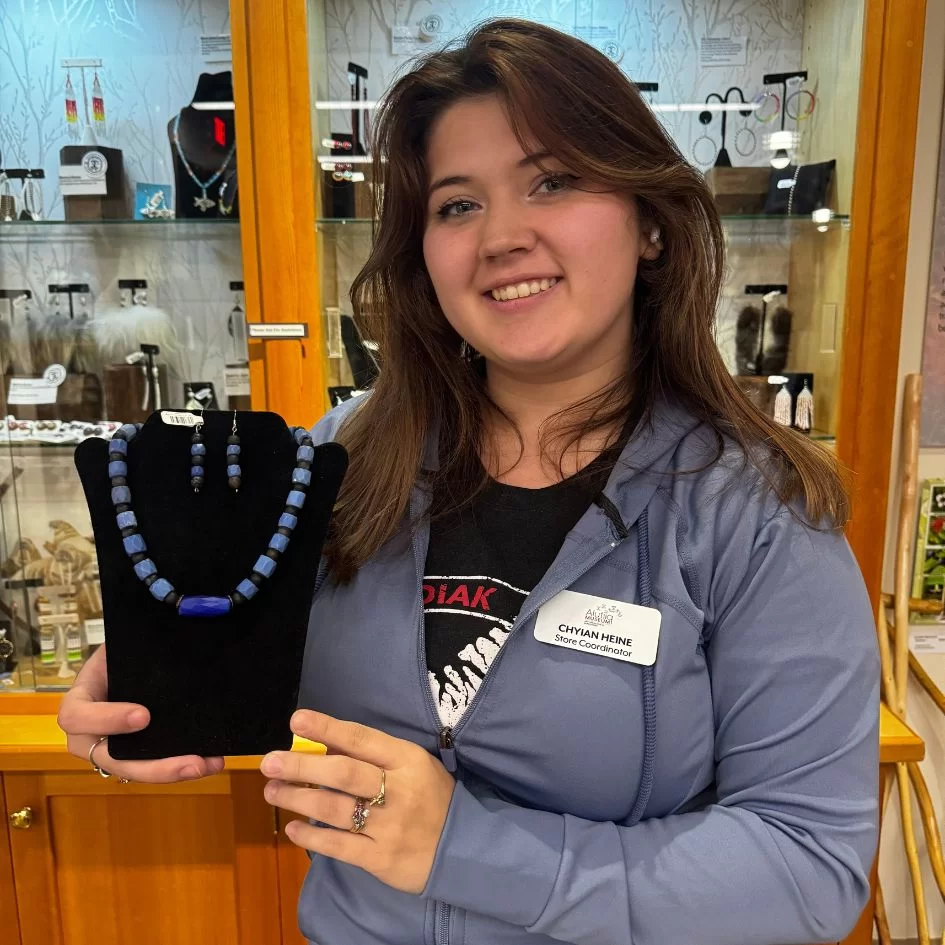
KODIAK—The Alutiiq Museum and the Kodiak Area Native Association (KANA) are collaborating on a retail and visitor services center. The Native Welcome Center, located in Kodiak’s downtown Marketplace, opened this week. It is designed to connect residents and tourists with Kodiak’s Native community. At the Welcome Center, visitors will find an orientation to the Alutiiq/Sugpiaq world and a selection of museum store merchandise. The center will sell both local artwork and museum products inspired by Kodiak’s Alutiiq heritage.
“The Marketplace was home to the Alutiiq Museum Store while we renovated our Mission Road building,” said Alutiiq Museum Executive Director April Counceller. “We rented a storefront to continue supporting artists and connect to our patrons. This centrally located cultural space became quite popular. More than 12,000 people visited last year. People loved having a place downtown to ask cultural questions, connect with our staff, and shop for local artwork. Many asked us to stay. With support from KANA and Koniag, we are able to do that.”
To advance the project, KANA is providing both space for the center and interns from its Workforce and Economic Development program. The interns are working beside museum staff members to learn about customer service, artist support, and retail management. The museum is providing its professional staff, furnishings, educational materials, and jewelry and artwork purchased from local artists. In the coming year, the museum is eager to develop plans for the welcome center with other stakeholders.
“This is the kind of partnership that really works. It brings people together, shares culture, and creates real opportunities for our interns to grow. The Welcome Center adds something special to our community, and we’re proud to support a space that celebrates who we are and helps shape what’s next,” said Mike Pfeffer, Chief Executive Officer of the Kodiak Area Native Association.
The Native Welcome Center is located on the first floor of the Marketplace, just inside the eastern entrance. Community members and visitors are invited to visit from 10:00 am to 5:00 pm, Tuesdays through Saturdays. There is no charge to visit the center. It is free to the public, and all are welcome.
Photo: Gallery & Retail Manager Chyian Heine
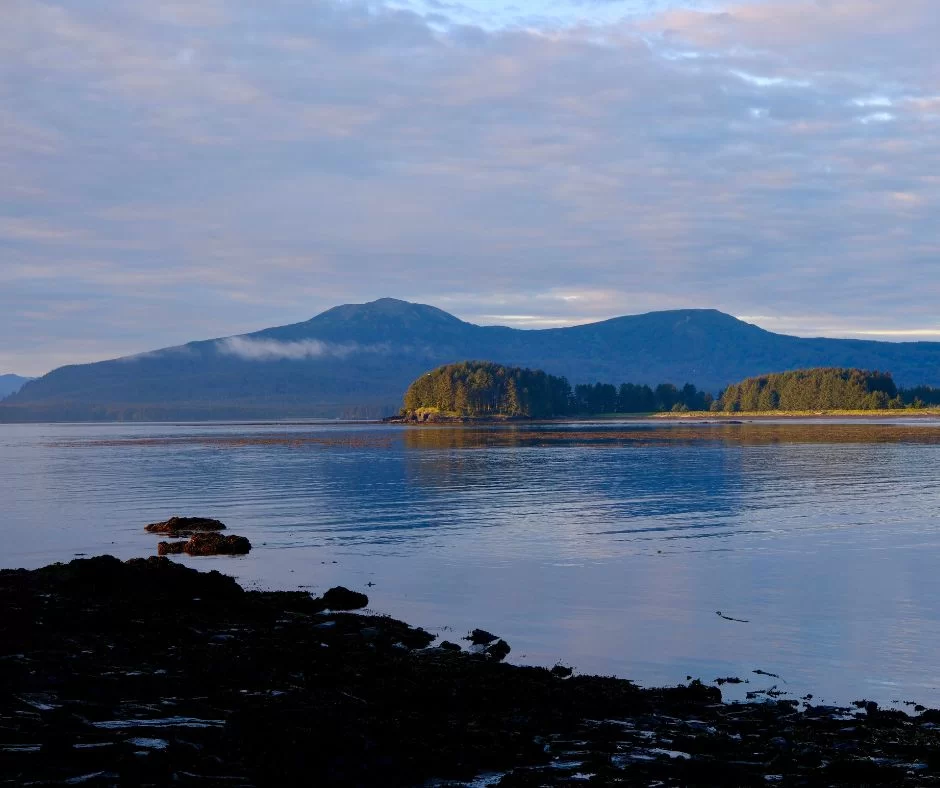
KODIAK—A digital place names map is the newest addition to the Alutiiq Museum’s website. This interactive tool allows visitors to explore over three hundred Alutiiq/Sugpiaq terms for Kodiak’s geographic features, landmarks, and communities. The map is based on research conducted by Dehrich Chya, the museum’s director of language and living culture. It was produced with support from the Native Village of Afognak and the US Bureau of Indian Affairs, with technical assistance from Sean Mack.
“Our people have lived on Kodiak for millennia, naming the places they live, harvest, and travel,” said Chya. “This map shares terms recorded in the past two centuries. Many come from interviews with Elder Alutiiq speakers. The names preserve cultural knowledge. They identify the places people harvested, they preserve information on hazards, like dangerous rocks and strong currents, and they recall past events like the discovery of an iron source or a battle.”
The map was constructed using ArcGIS, a platform that can meld cultural information with geospatial data. Users of the map can click on a place in the archipelago to see its Alutiiq name and hear it pronounced by an Alutiiq speaker. About a quarter of the entries also feature a photo from the museum’s collections. The map can be accessed from the language page of the museum’s website at https://alutiiqmuseum.org/alutiiq-people/language/#names. The website presentation includes the interactive map, a downloadable poster with fifty Alutiiq place names superimposed on a painting of the archipelago by Bruce Nelson, and links to place names research and summaries of village histories.
“This resource reminds us of the deep connections we have to Kodiak,” said Alutiiq Museum Executive Director April Laktonen Counceller. “When we can see and learn Alutiiq place names, we recognize our history and our ongoing connections to the world of our ancestors.”
Chya sees the map as a place to share and compile information, and as documentation of the Alutiiq language continues, he plans to add to it. He said, “I’m always looking for additional names. Sometimes people remember them. Other times, names are preserved in historic documents. And as Alutiiq is a living language, speakers are continuing to name places. Our map project included training so that we can continue to update the map with cultural knowledge.”
Photo: Ar’ursurwik–Whale Island
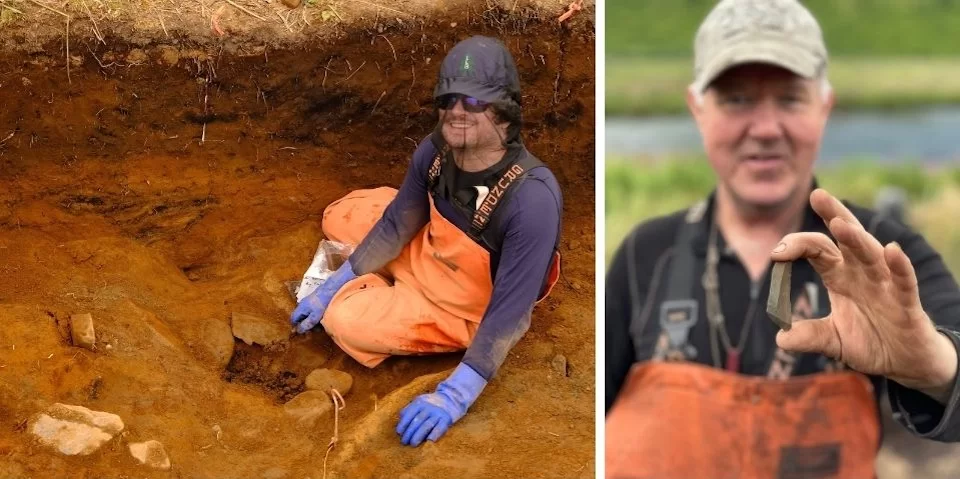
KODIAK—Archaeological research at the Alagnaruartuliq site (KAR-00064) on the shore of Kodiak Island’s Karluk Lake has revealed the remains of a very old campsite. A pair of radiocarbon dates on wood charcoal from an ancient hearth suggest that Alutiiq/Sugpiaq ancestors rested and made tools beside the confluence of Karluk Lake and River about 7,800 years ago. This date pushes the human settlement of Kodiak back at least 300 years. Until now, the oldest dated archaeological finds from Kodiak were about 7500 years old. Alutiiq Museum Director of Archaeology Molly Odell explained.
“We went to Alagnaruartuliq last summer to study an ancestral Alutiiq settlement visible on the site’s surface. Beneath a set of house depressions, there was a series of much older occupations. At the very bottom of the site, we found a small hearth made of cobbles associated with stone tools often found in Kodiak’s earliest sites.”
To date the hearth, the archaeologists sent a sample of the wood charcoal it contained to a professional laboratory for radiocarbon dating. When they received a date of 7800 years, they dated a second sample.
“Radiocarbon dates are estimates,” said Odell. “They provide a probable range. The first date was exciting, but to confirm its accuracy, we ran a second date with another lab. The dates were very similar. We are now confident they are good estimates. They suggest the hearth was used about 7800 years ago. This is 300 years older than any other dated settlement from Kodiak.”
“Three hundred years is a long time,” said Alutiiq Museum Curator of Archaeology Patrick Saltonstall. “But the dates are not surprising. We’ve been expecting to find older settlements. People were living along the coast of the Gulf of Alaska at least 10,000 years ago. These were maritime people. They were harvesting resources and traveling to places that required boats. It makes sense that they would have reached Kodiak, that there would be similarly aged settlements here. We just haven’t been able to locate them.”
Alutiiq Museum researchers believe that changes in sea level and coastal erosion have impacted their ability to find older settlers. Archaeologists have located and dated numerous old sites in coastal settings around Kodiak. A recently tested settlement overlooking Kiliuda Bay dated to about 7,400 years ago. The bottom of several settlements on the inner shores of Chiniak Bay are about 7,300 years old. Older dates have been elusive.
“About 7,300 years ago, sea level stabilized in the Gulf of Alaska, and the coast took on more of its modern shape,” said Saltonstall. “Sites dating to this point in time have been relatively easy to find. They are on old shorelines, often beneath younger settlements. Older sites from the coast may be underwater or washed away. In Kodiak’s interior, sea level is not impacting site preservation. It makes sense that we’d find more ancient deposits in this setting.”
Alagnaruartuliq means “lots of kinds of berries” in the Alutiiq language. The research team picked this name for the Karluk Lake site to highlight the rich resources found in Kodiak’s interior and support growing evidence of intensive use of this environment by Alutiiq ancestors. Surveys and excavations by Alutiiq Museum archaeologists illustrate that the courses of salmon streams were intensively settled for thousands of years. Now it appears that even early settlers harvested here.
“Kodiak has such rich maritime resources that researchers have overlooked the economic importance of its inland streams, meadows, and alpine areas,” said archaeologist and Alutiiq Museum Chief Curator Amy Steffian. “Over the past twenty-five years, we’ve been exploring Kodiak’s river valleys and documenting hundreds of sites. We now know that the interior was a critical habitat for hunting and collecting, as well as fishing, throughout the region’s human history. This recent find confirms that Alutiiq ancestors used the interior from first settlement.”
What were Alutiiq ancestors harvesting at Karluk Lake 7800 years ago? Studies from neighboring areas of the Gulf of Alaska suggest salmon populations stabilized and grew after 6,300 years ago. Archaeologists believe that early lake visitors may have been hunting waterfowl, collecting plant foods, or harvesting from the fox, river otter, and bear populations that settled Kodiak well before people arrived.
This week, the Alutiiq Museum launched another season of research at Karluk Lake. Archaeologists will be studying a 1500-year-old settlement to continue learning about the activities that took place in Kodiak’s interior and how they changed over time. They don’t anticipate finding another early settlement, but archaeology is a fickle science, and Saltonstall has his eyes open. “I’m excited to look for more evidence of early settlers,” he said.
“Learning about our history is so important,” said Alutiiq Museum Executive Director April Laktonen Counceller. “Each time we record a site or study an artifact, we add to the knowledge of our remarkable past. We are grateful to Koniag for their support of archaeological research at the Alutiiq Museum. It is revealing our ancestors’ world.”
The Alutiiq Museum’s ongoing research program at Karluk Lake is supported by Koniag. The National Park Service’s Alaska Native Tribal Affairs and Heritage Assistance Programs helped with radiocarbon dating.
Photos: Left–Trevor Lamb excavates a small cobble hearth at the Alagnaruartuliq site. Charcoal from this feature dated to about 7800 years ago. Right–Patrick Saltonstall holds a stone blade from the oldest level of Alagnaruartuliq site. Alutiiq Museum photographs, 2025.